

Brunner & Suddarth's Medical-Surgical Nursing 16th Edition Test Bank: A System-by-System Study Plan
Open Brunner & Suddarth's Textbook of Medical-Surgical Nursing, 16th Edition and the first thing you notice is how much there is to learn. Cardiovascular, respiratory, neurological, endocrine, renal, and more, each with its own disease processes, medications, and nursing priorities. It is easy to read for hours and still wonder whether any of it will stick.
The fix is not more reading. It is a plan that turns the textbook into questions you have to answer. This guide walks you through a simple system-by-system routine, and shows where a chapter-based test bank fits into it.
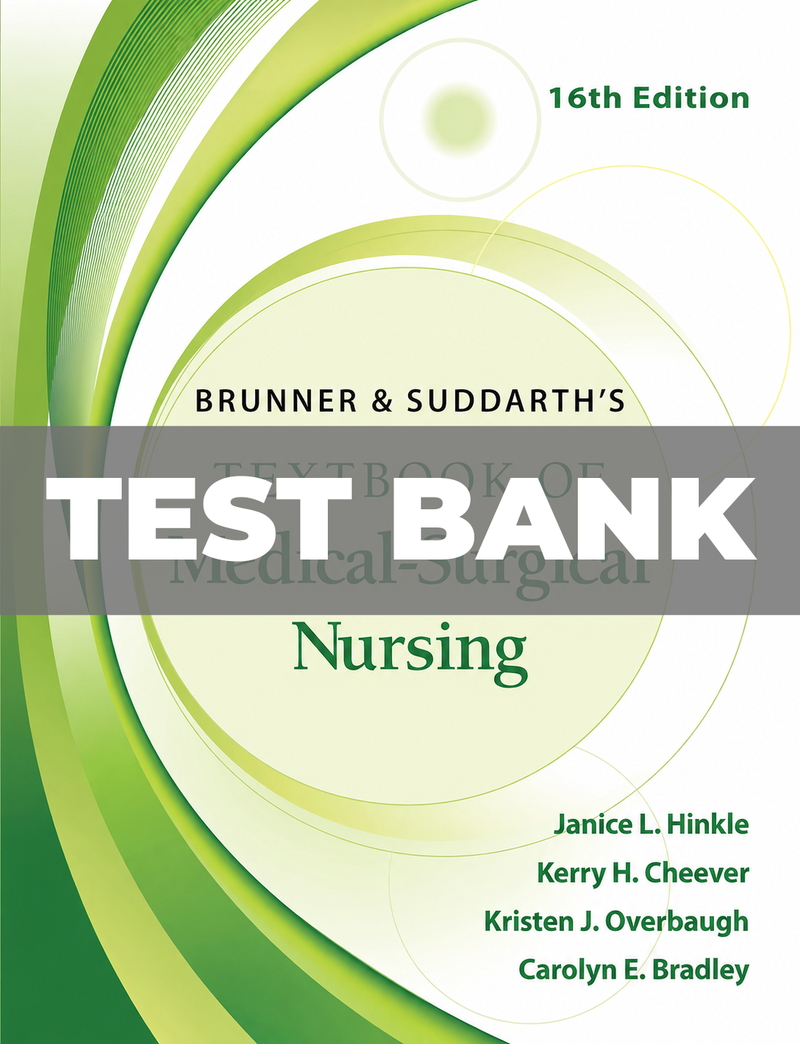
If you are already looking for practice material, here is the Test Bank for Brunner and Suddarth's Textbook of Medical Surgical Nursing 16th Edition.
Why Med-Surg Content Is Easy to Read but Hard to Remember
Med-surg rewards understanding, not memorization. You are expected to connect what is happening in the body to what you will see in a patient, what you will do about it, and why. When you only read, the material feels familiar, and familiarity is easy to mistake for knowing it.
Exam questions expose that gap. They present a patient situation and ask you to choose the safest or most important action. Practicing with questions during the semester, rather than the night before, is how you learn to make those decisions under pressure.
What the Brunner & Suddarth 16th Edition Test Bank Covers
This test bank is designed to complement the textbook and follows its chapter sequence, so it is simple to pair with your reading schedule. According to the product details, the questions cover the full scope of medical-surgical nursing, including:
- Health promotion, patient-centered care, and clinical judgment
- Pathophysiology and pharmacology
- Perioperative nursing and pain management
- Fluid and electrolyte balance
- Oncology
- Nursing management of cardiovascular, respiratory, neurological, endocrine, gastrointestinal, renal, musculoskeletal, hematologic, and immune disorders, as well as multisystem disorders
It is intended for nursing students preparing for classroom exams, clinical rotations, and NCLEX®-style assessments.
A System-by-System Study Plan You Can Start This Week
Instead of jumping around the book, work through one body system at a time. Here is a routine that fits into a normal week of classes and clinicals.
Step 1: Get the big picture (day 1)
Skim the chapter headings and summary boxes first. Ask yourself what the main disorders are and how they affect the patient. You are building a map before you fill in the details.
Step 2: Read for mechanisms (days 1 to 2)
As you read, focus on the "why": why does this condition cause these signs and symptoms, why is this medication given, and why is this intervention the priority? If you can explain it in your own words, you understand it.
Step 3: Answer chapter questions (day 3)
Now switch to practice questions for that chapter. Answer each one before checking the rationale, and mark the ones you were unsure about, even if you got them right.
Step 4: Fix your weak spots (day 4)
Go back to the textbook for every topic you missed. Write a one-line correction in your own words, such as "first sign of hypoxia is restlessness, not cyanosis." Short, specific notes are easier to review later than rewritten chapters.
Step 5: Review across systems (weekend)
Mix a few questions from earlier systems into your weekend review. Med-surg topics overlap constantly, and cumulative practice keeps older material from fading.
Turn Practice Questions Into Clinical Judgment
The goal of practice questions is not to collect right answers. It is to train how you think. As you work through them, ask yourself a few things every time:
- What is the question really asking? Look for words like first, priority, best, or most concerning.
- What is the patient at risk for? Think about the most likely complication for this condition.
- Which option is safest? Consider airway, breathing, and circulation, and whether the action addresses the cause or only a symptom.
- Why are the other options wrong? Explaining why a wrong choice is wrong is one of the fastest ways to learn.
Using the Test Bank for Clinicals and Licensure Prep
Clinical rotations are where med-surg comes to life. Before a shift, look up the conditions you expect to see and answer a handful of questions on them. Afterward, revisit those questions with a real patient in mind. The concepts become easier to recall when you have attached them to a face and a situation.
As graduation gets closer, gradually widen your practice from single chapters to mixed sets. The Next Generation NCLEX (NGN) also uses case-based items, so add scenario practice from your program or an NCLEX review resource alongside your chapter questions.
Common Study Mistakes to Avoid
- Cramming the week before exams. Spaced practice beats last-minute marathons.
- Memorizing answers instead of reasoning. If the question is reworded, memorized answers stop working.
- Skipping rationales. The explanation is where most of the learning happens.
- Ignoring lab values and medications. They appear across every body system.
- Studying only what feels comfortable. Start each session with your weakest system.
Is a Test Bank Enough by Itself?
A test bank works best alongside your textbook, lectures, and clinical experience. It is independent study material and is not affiliated with the textbook's publisher, and it cannot promise a particular grade or NCLEX result. What it can give you is structured, chapter-by-chapter practice that makes your study time more active and more focused.
Frequently Asked Questions
Which textbook edition does this test bank match?
It is designed to complement Brunner & Suddarth's Textbook of Medical-Surgical Nursing, 16th Edition. Confirm that your course uses the same edition so the chapters line up.
Does it follow the textbook's chapter order?
Yes. It is organized to follow the textbook's chapter sequence, so you can practice each chapter right after reading it.
Can it help me prepare for the NCLEX?
It is meant for exam, clinical, and NCLEX®-style preparation. For full licensure prep, combine it with a dedicated NCLEX review resource and case-based practice.
What body systems does it cover?
The product covers cardiovascular, respiratory, neurological, endocrine, gastrointestinal, renal, musculoskeletal, hematologic, and immune disorders, along with perioperative care, pain management, fluid and electrolyte balance, and oncology.
How much does it cost?
The listed price is $17.99. Check the product page for current pricing and delivery details.
Start Practicing Chapter by Chapter
A good med-surg routine is simple: read, answer questions, review your mistakes, repeat. If you are studying from Brunner & Suddarth's Textbook of Medical-Surgical Nursing, 16th Edition, the Test Bank for Brunner and Suddarth's Textbook of Medical Surgical Nursing 16th Edition gives you chapter-based questions to build that routine around. You can also browse more nursing study resources at LearnBulk.